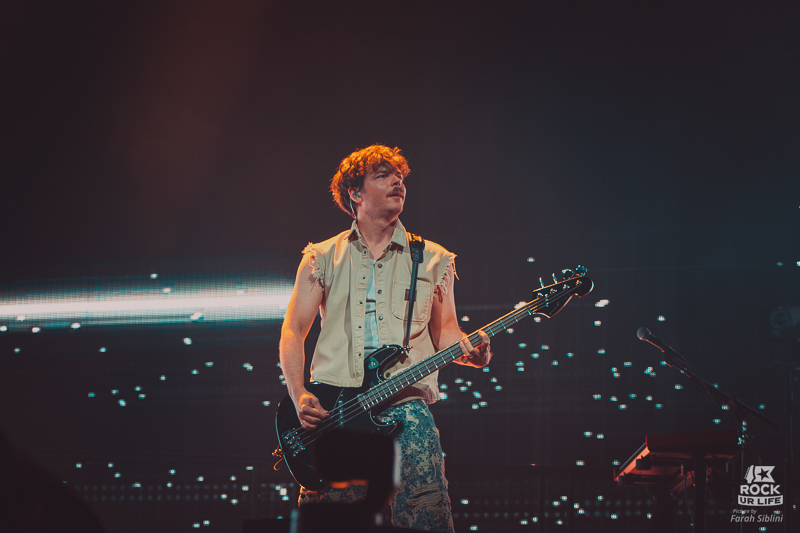
More than twenty years after having captured the hearts of an entire generation, Tokio Hotel was back in the capital this Friday, October 30. It was at the Adidas Arena that the German quartet invited its crowd to an evening mixing new material, classics and childhood memories. Between an ambitious stage design, outfits that were as extravagant as they were, and a setlist tracing the band’s different eras, the Kaulitz brothers and their bandmates had clearly decided to go all out.
Nia Ashleigh
It’s NIA ASHLEIGH who opens the festivities with a relatively short but rather pleasant performance. The artist offers a musical universe quite different from that of the headliner, with soft sounds, sometimes almost jazzy, which create a fairly intimate atmosphere in the Adidas Arena.
Far from big productions and stage artifices, the singer favors a simple approach, letting the music occupy center stage. A contrast with what awaits the audience a few moments later. The set ends with a cover of “I Don’t Want To Miss A Thing” by Aerosmith, adding a final touch of sweetness to this first part. If the passage is a bit quick to truly immerse in her world, the whole remains pleasing and allows the evening to start calmly.
Tokio Hotel
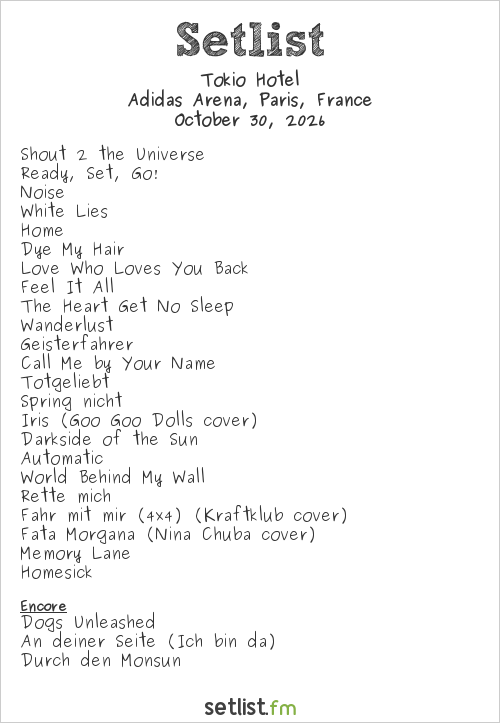
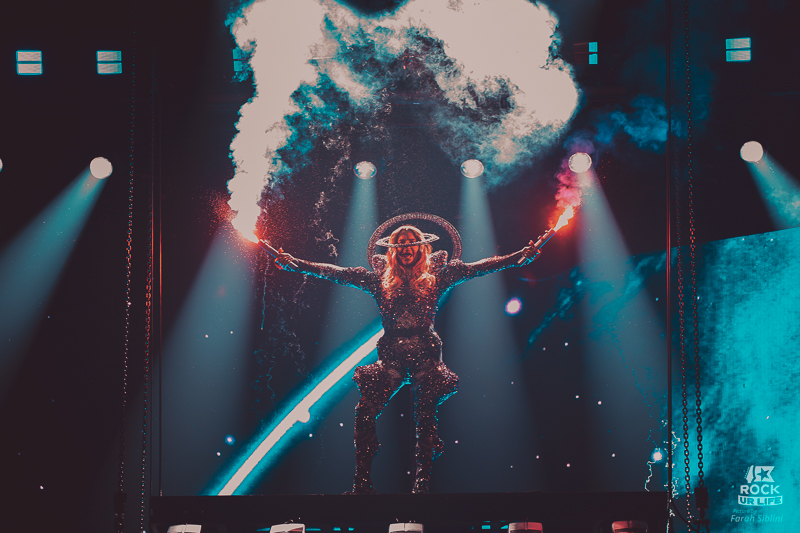
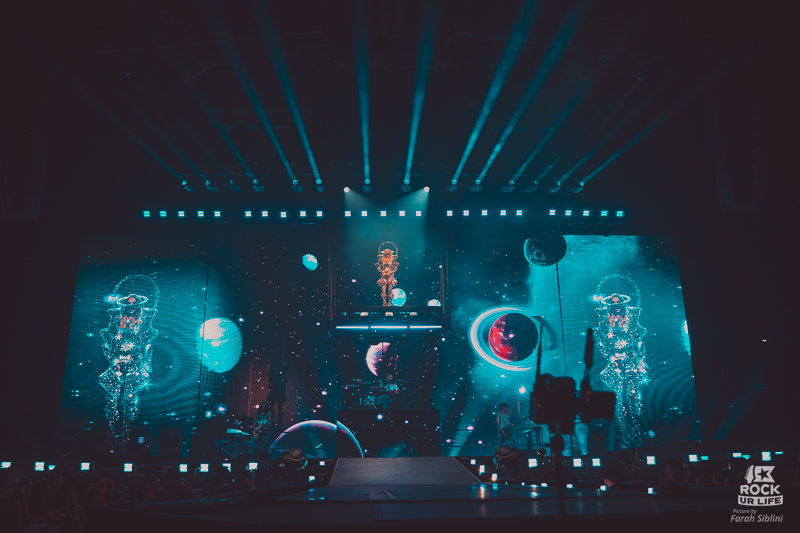
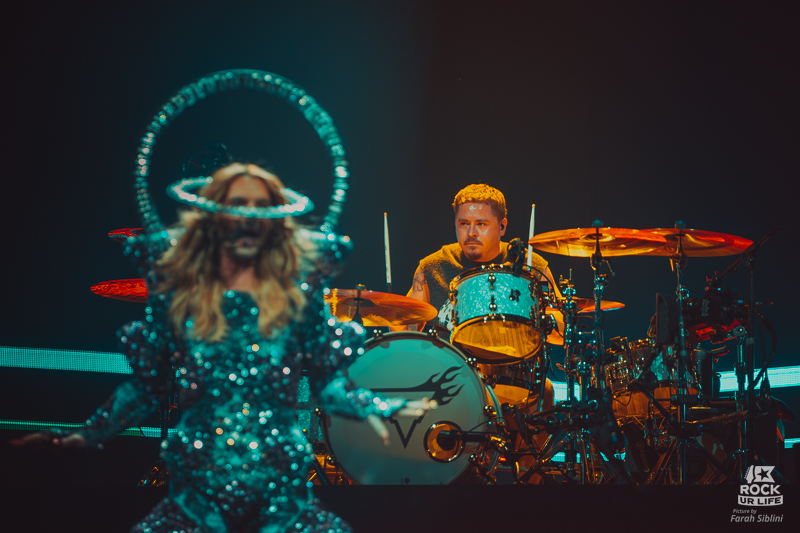
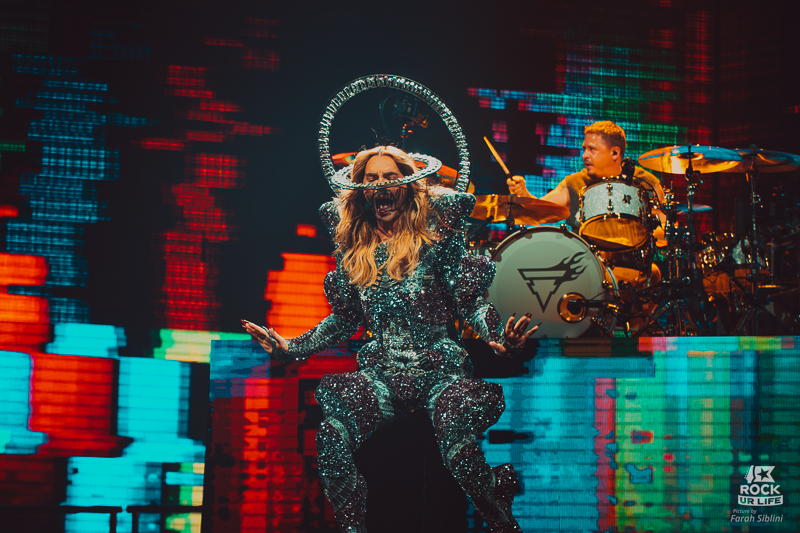
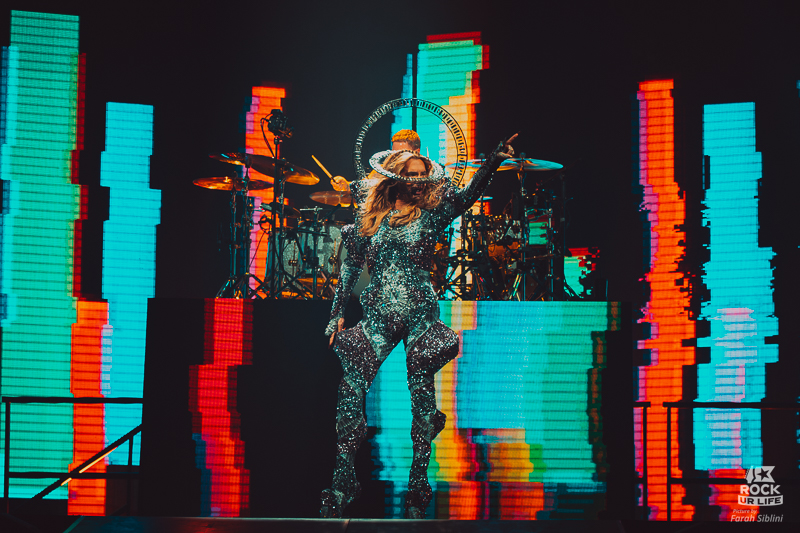
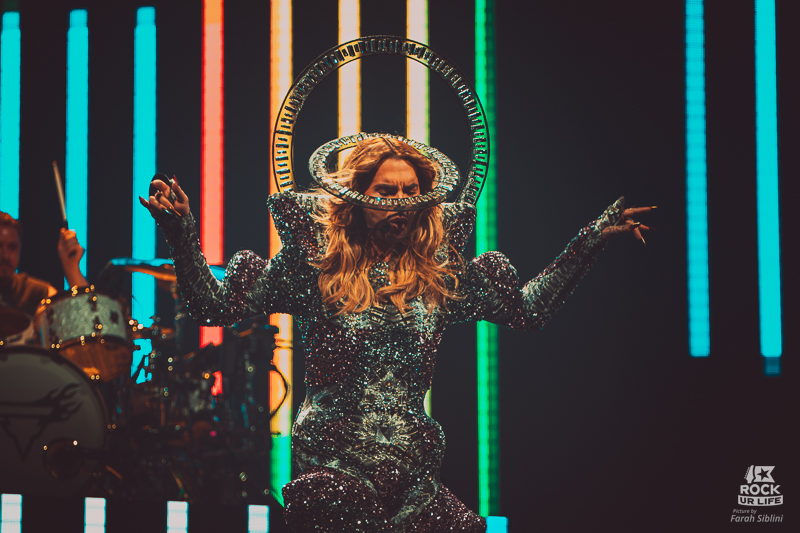
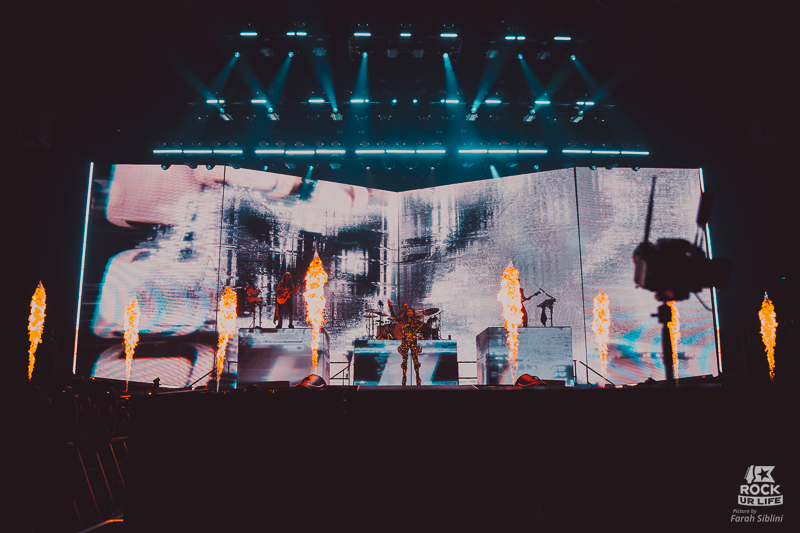
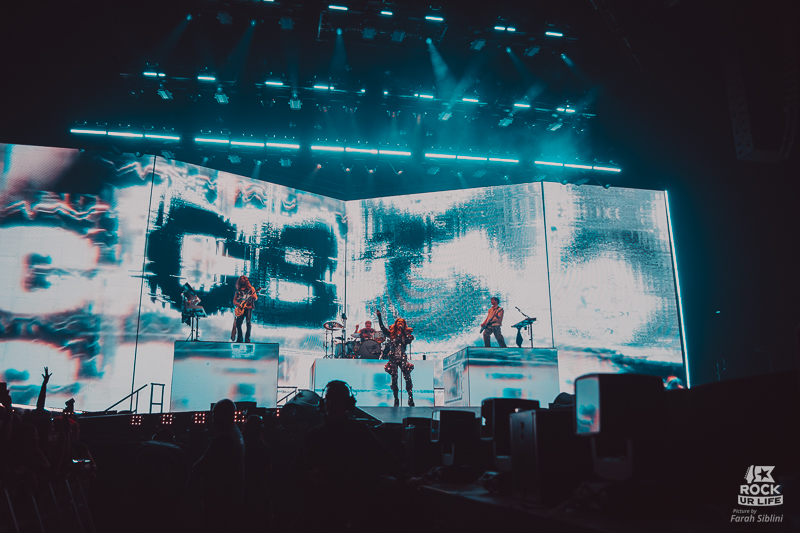
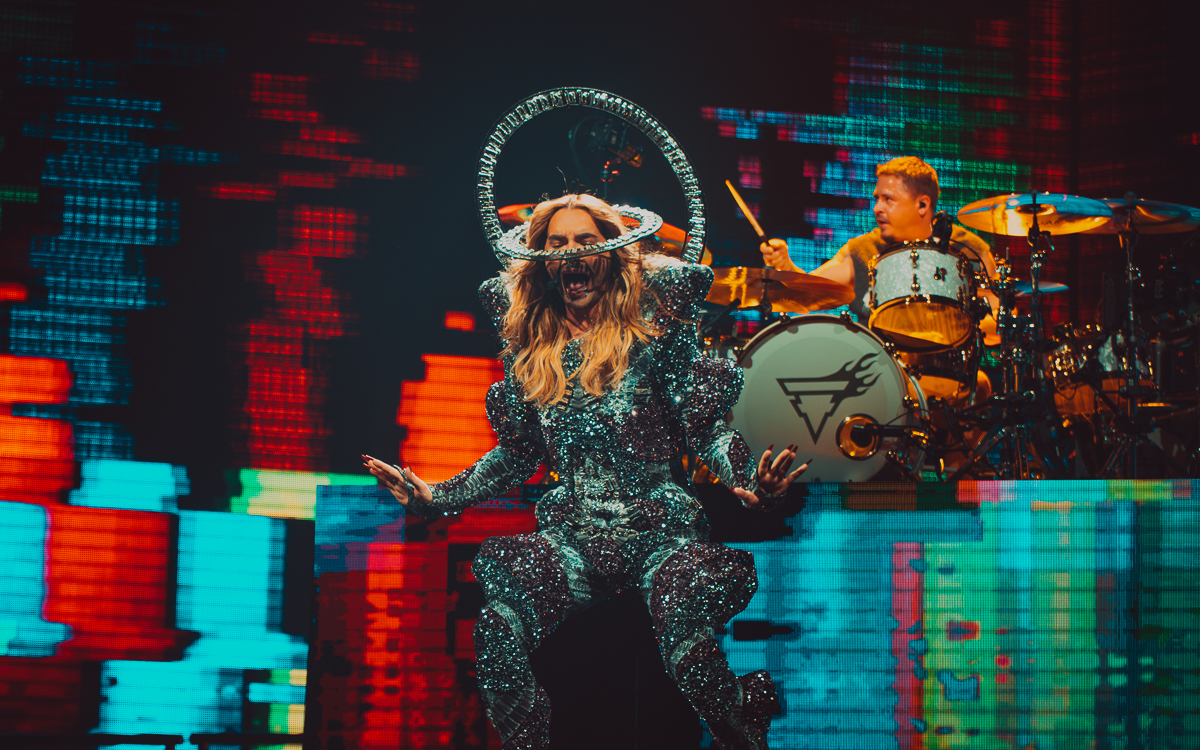
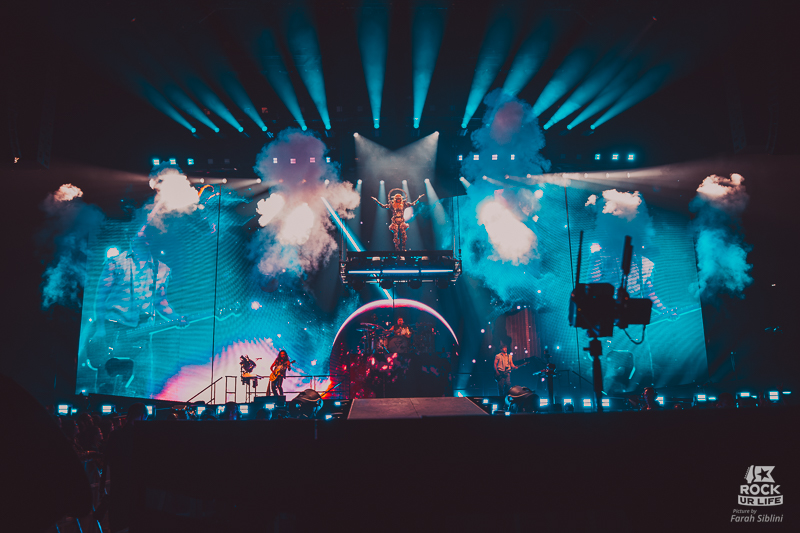
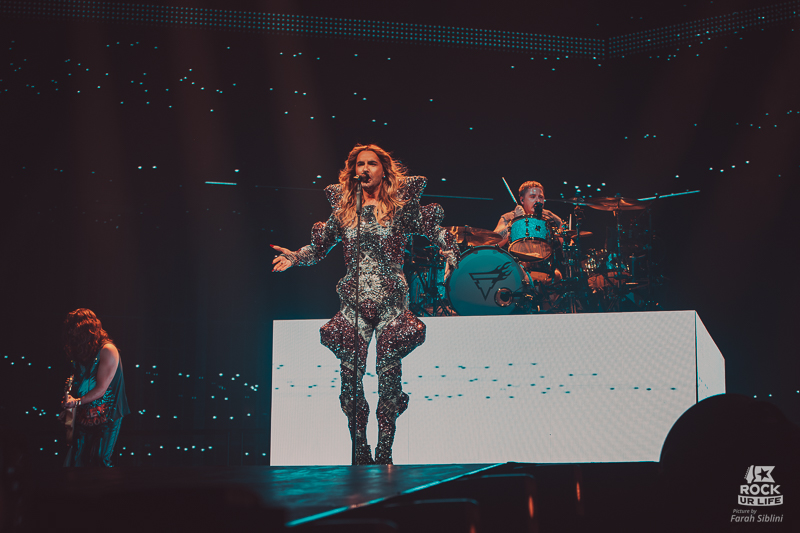
When the lights go out, a radical change of atmosphere. TOKIO HOTEL makes its entrance with “Shout 2 The Universe”, in a particularly meticulous staging. The giant screen at the back of the stage immediately plunges the room into a cosmic world, between light projections and visual effects. Bill Kaulitz appears in a sparkling outfit, topped with an imposing hairstyle reminiscent of Saturn’s rings. An entrance as surprising as it is successful, which immediately sets the tone of the evening.
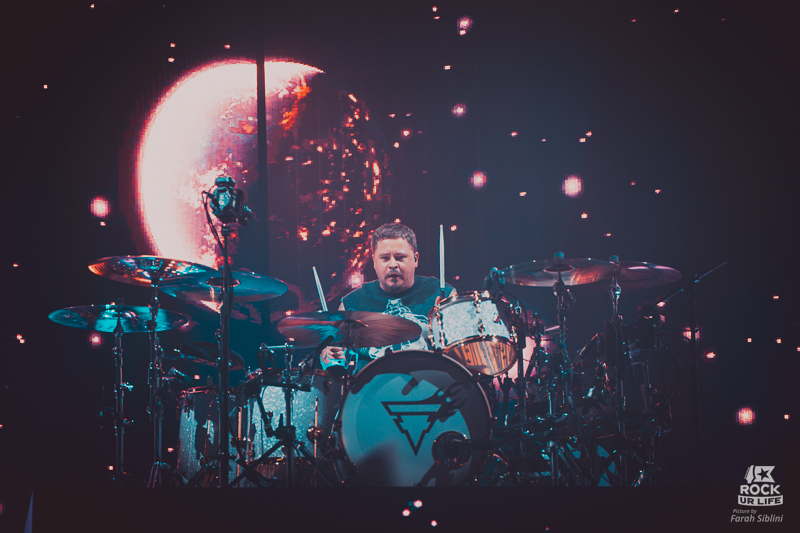
The band continues with “Ready, Set, Go!” and “Noise”, two tracks that quickly awaken the memories of early fans. In the crowd, the lyrics are sung back with enthusiasm, while the four musicians power through the songs without difficulty. The setlist favors different eras of their career, ranging from newer tracks like “Dye My Hair”, “Wanderlust” or “Call Me By Your Name” to older pieces such as “Geisterfahrer”, “Totgeliebt” and “Automatic”. A mix that allows us to gauge the band’s musical evolution, now far removed from their early years which were exclusively rock, with a significant emphasis on pop and electronic sounds.
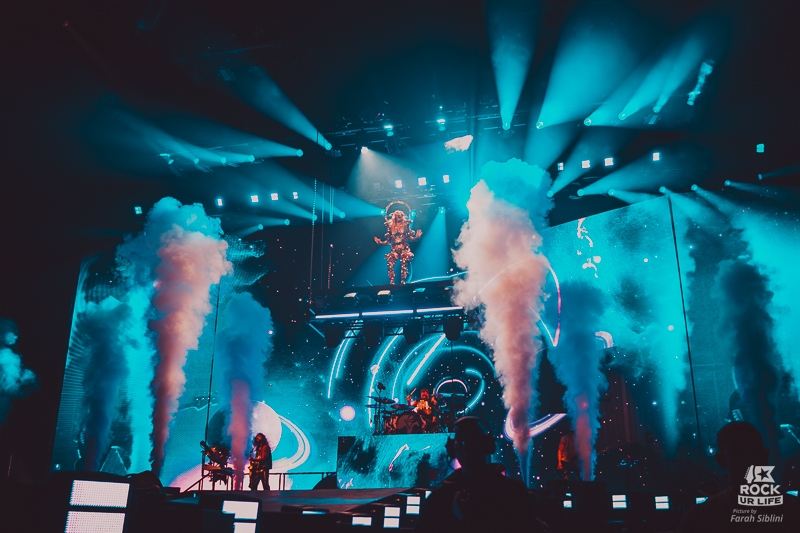
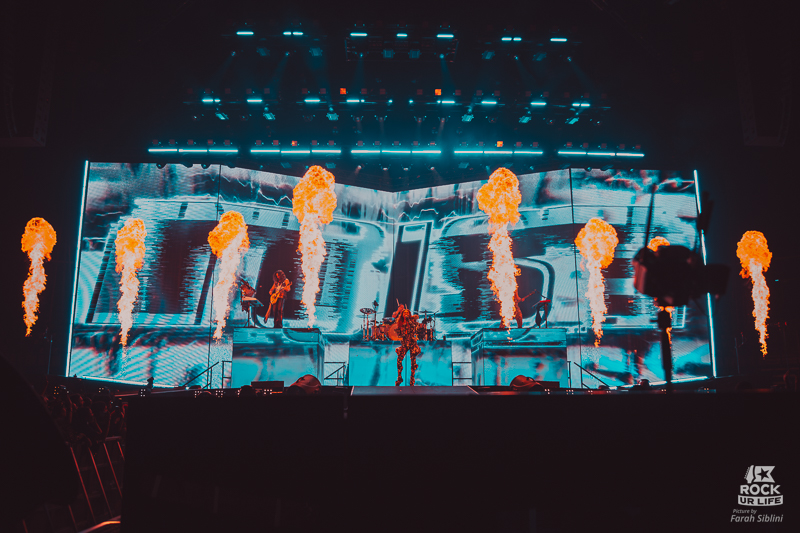
But difficult to discuss this concert without dwelling on its visual aspect. The staging takes a central place in the show, with a giant screen accompanying the tracks through varied projections, sometimes futuristic, sometimes more understated. The lighting effects reinforce the whole and give each part of the concert its own distinctive identity. The result is quite impressive and testifies to real production work.
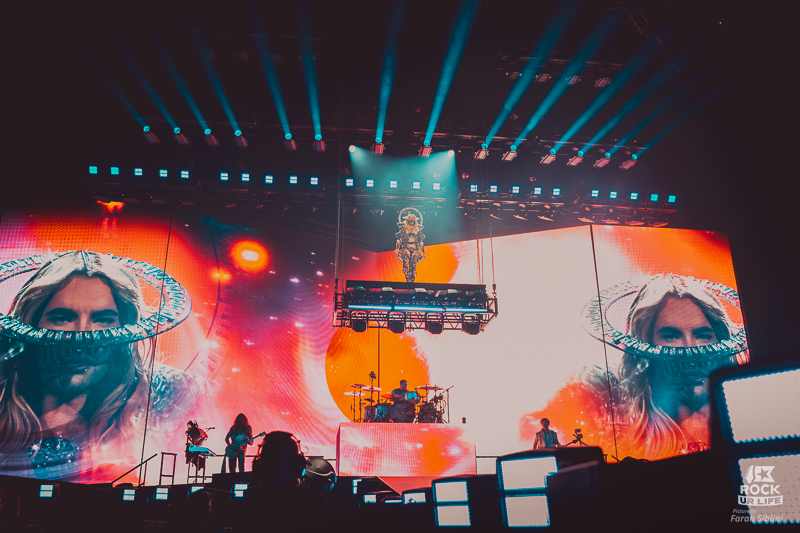
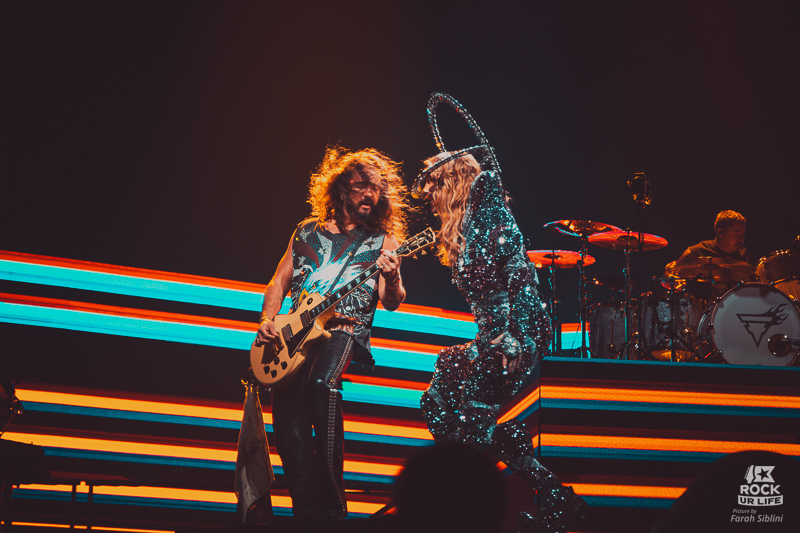
And then, there is obviously Bill Kaulitz. The singer seems to have transformed this tour into a genuine fashion show, multiplying costume changes throughout the evening. Between sparkling outfits, oversized accessories and sometimes improbable silhouettes, it’s hard to know what to expect at each new appearance. Some creations surprise as much as they impress, but one thing is certain: Bill fully embraces his extravagance. A sense of showmanship that has now become an integral part of Tokio Hotel’s identity, even if these numerous outfit changes can sometimes slow the concert’s pace a little.
Despite this imposing production, the singer does not neglect interactions with his audience. Regularly, he speaks between songs, slips in a few jokes and enjoys the crowd’s reactions. Spontaneous comments that bring a touch of humor and help maintain a certain closeness with the spectators. Bill, a true diva, seems particularly at ease in this practice, naturally alternating between his extravagant persona and much simpler moments.
Un retour dans le passé chargé d’émotion
If the evening heavily leans toward spectacle, it also reserves a few more touching moments. With “Spring Nicht”, “World Behind My Wall” or even “Rette Mich”, the group dives back into a repertoire that accompanied the adolescence of many spectators present this evening. Songs that evidently have not lost their importance in the eyes of the public, as reactions are immediate from the first notes.
But it’s probably “Memory Lane” that offers one of the most moving moments of the concert. As the track resonates in the Adidas Arena, the giant screens display a sequence of photographs tracing the band’s history. We can see the four musicians in their early days, still teenagers, before watching them evolve through the years to today.

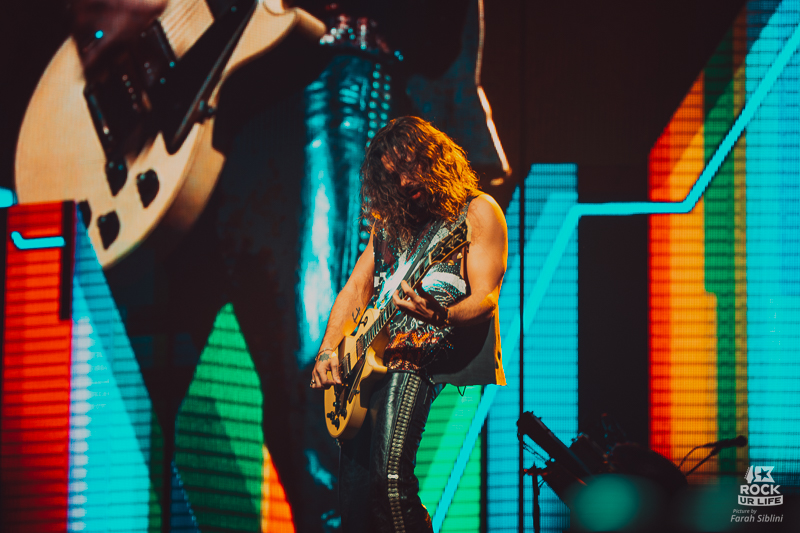

Un passage particulièrement touchant pour les fans historiques. Autour de nous, plusieurs spectateurs ne peuvent retenir quelques larmes en découvrant ces images. Il faut dire que, pour beaucoup, Tokio Hotel représente bien plus qu’une simple période musicale. Ce sont des souvenirs d’adolescence, des premières passions, des chansons écoutées en boucle et parfois même les premiers concerts. Voir défiler ces photographies vingt ans plus tard, alors que les quatre musiciens sont toujours réunis sur scène, donne forcément une dimension particulière à ce moment.
Cette séquence rappelle aussi que, derrière les costumes extravagants et les productions toujours plus ambitieuses, il y a avant tout quatre musiciens qui ont grandi avec leur fans. Et c’est peut-être là que réside l’une des forces de cette soirée : réussir à faire cohabiter le groupe d’hier avec celui d’aujourd’hui, sans chercher à effacer l’un au profit de l’autre.
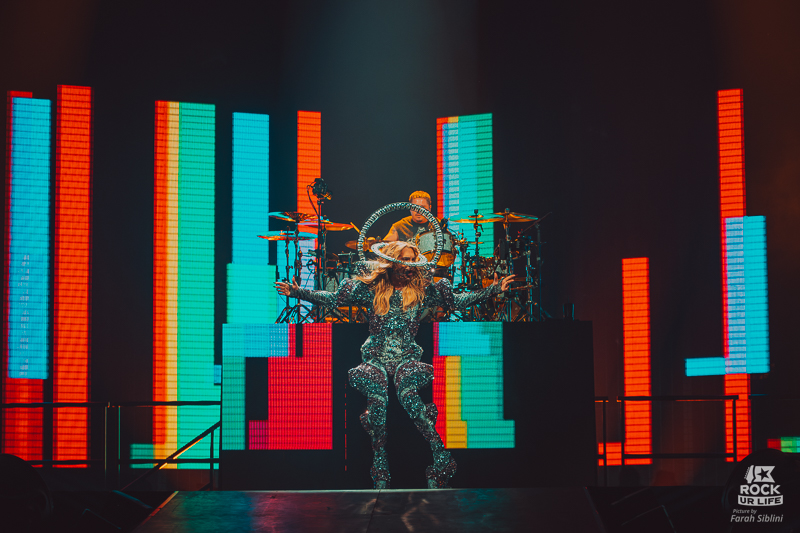
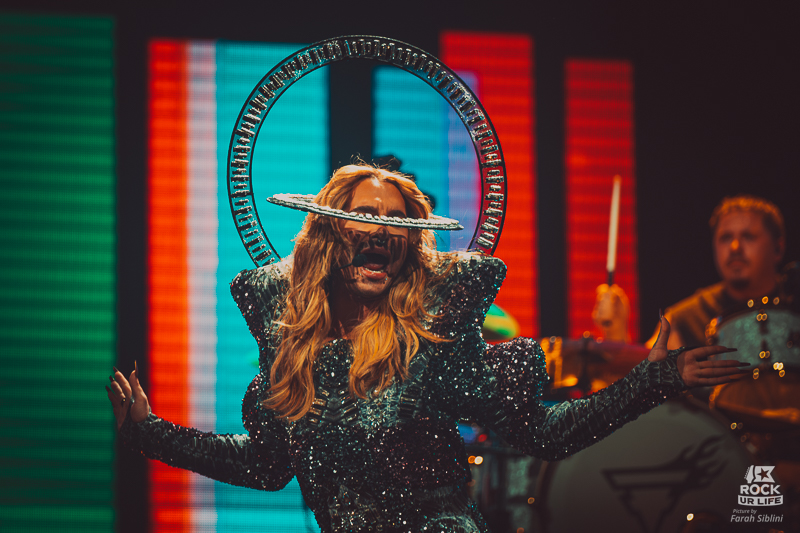
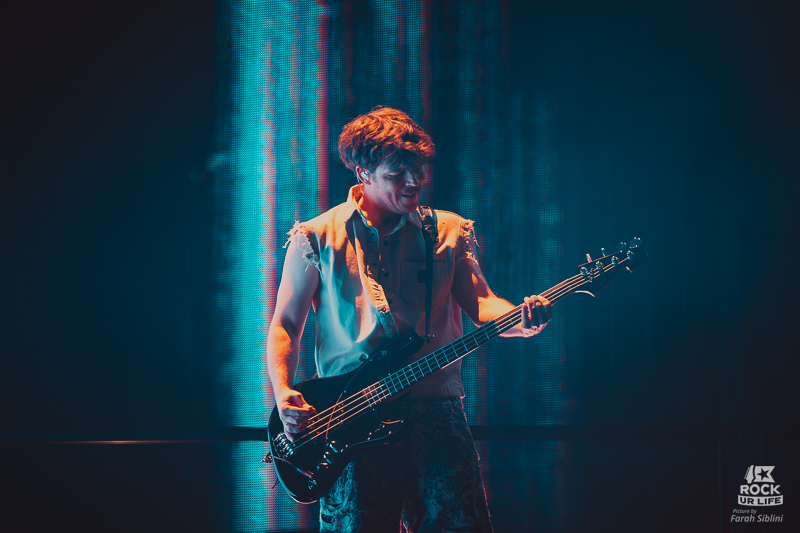

La fin du concert retrouve une énergie plus festive avec « Homesick », avant un rappel lancé sur « Dogs Unleashed ». « An Deiner Seite (Ich Bin Da) » apporte ensuite une dernière parenthèse nostalgique, avant que les premières notes de « Durch Den Monsun » ne viennent conclure la soirée. Difficile d’imaginer un meilleur choix pour terminer ce voyage à travers les années. Véritable morceau emblématique du groupe, le titre est repris avec enthousiasme par une salle qui semble retrouver, le temps de quelques minutes, l’énergie de ses années adolescentes.
With this new tour, Tokio Hotel shows that it has managed to evolve without completely turning its back on its origins. The band offers a generous concert, propelled by an impressive visual production, a varied setlist and a Bill Kaulitz who remains as unpredictable as ever. If the show’s highly theatrical aspect sometimes takes precedence over the music, it also helps give this evening a very distinctive personality.
Avec cette nouvelle tournée, Tokio Hotel démontre qu’il a su évoluer sans complètement tourner le dos à ses origines. Le groupe propose un concert généreux, porté par une production visuelle impressionnante, une setlist variée et un Bill Kaulitz toujours aussi imprévisible. Si l’aspect très théâtral du spectacle prend parfois le dessus sur la musique, il contribue aussi à donner à cette soirée une personnalité bien particulière.
Au-delà des costumes et des effets visuels, c’est surtout la relation entre le groupe et son audience qui marque les esprits. Vingt ans après leurs premiers succès, les quatre Allemands continuent de réunir des fans qui ont grandi avec eux, tout en défendant leur identité musicale actuelle. Une belle manière de rappeler que certaines histoires ne s’arrêtent pas avec l’adolescence.